

When Tower Hamlets councillors voted for a pay rise in May 2026, not one voted against. Reflections on why and filling the blanks in the debate so far, initiated by Andrew Wood.
Andrew Wood Strikes Again
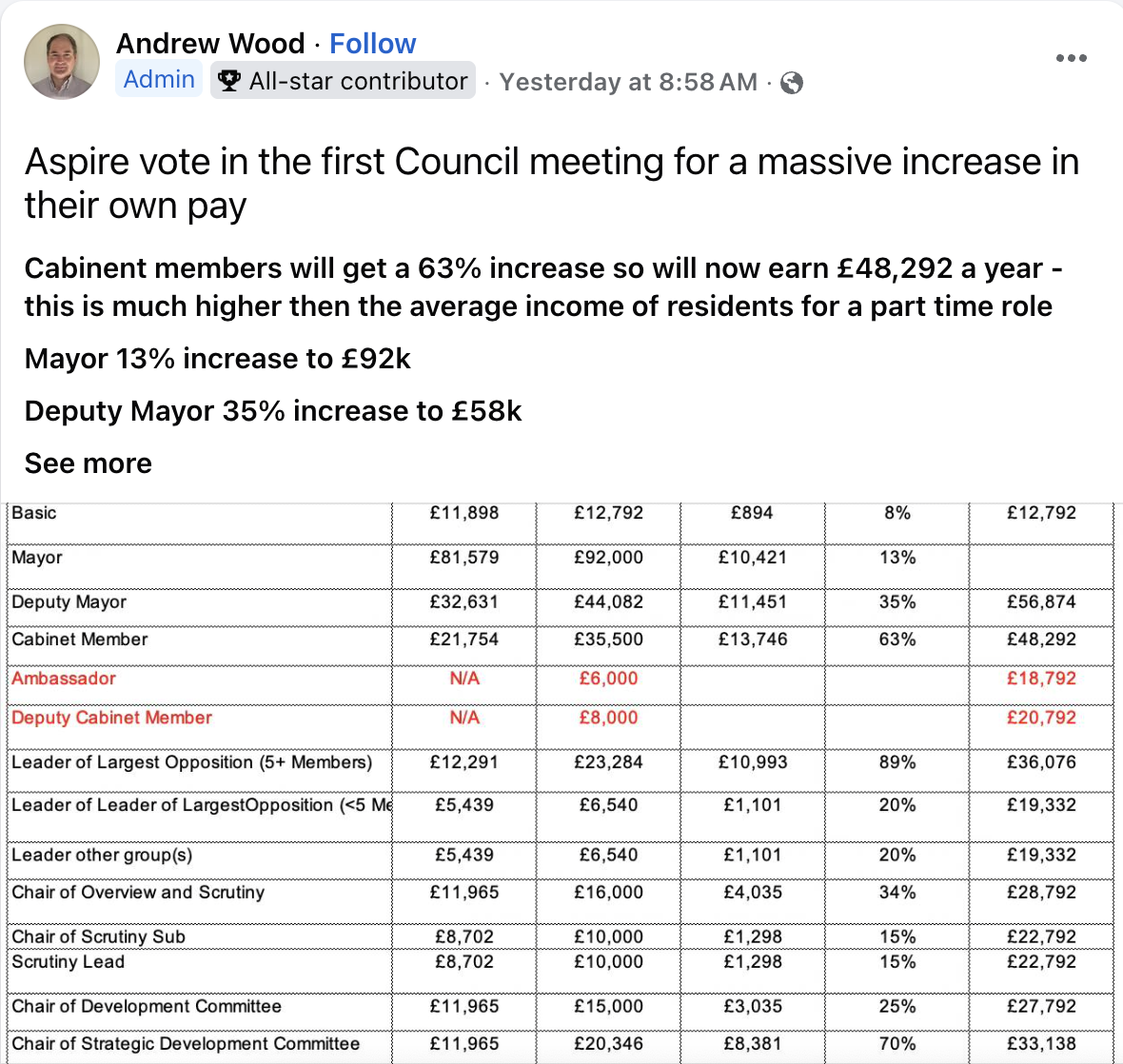
On 20 May 2026, at full council, Tower Hamlets councillors voted unanimously to increase their own allowances, based on recommendations from an independent panel comparing remuneration with neighbouring boroughs. Not a single councillor from Aspire, Labour, the Greens, the Conservatives, or the Liberal Democrats voted against. Andrew Wood subsequently posted the details on social media, igniting considerable discussion across various platforms.
Eight years ago, at our first council meeting in 2018, Cllr James King, Cllr Gabriela Salva, and I broke the Labour Group whip and voted against a comparable pay award proposed by the then Labour Mayor, John Biggs. We had been elected on an anti-austerity platform, and we regarded accepting a pay rise as a direct betrayal of it.
Eight years on, four of which I spent as a serving councillor, would I have voted against this award had I still been in that chamber?
The Real Cost of Being a Councillor
The most common criticism levelled at pay awards of this kind is that being a councillor is not a full-time job. In formal terms, that is technically correct. In practice, it is simply not true.
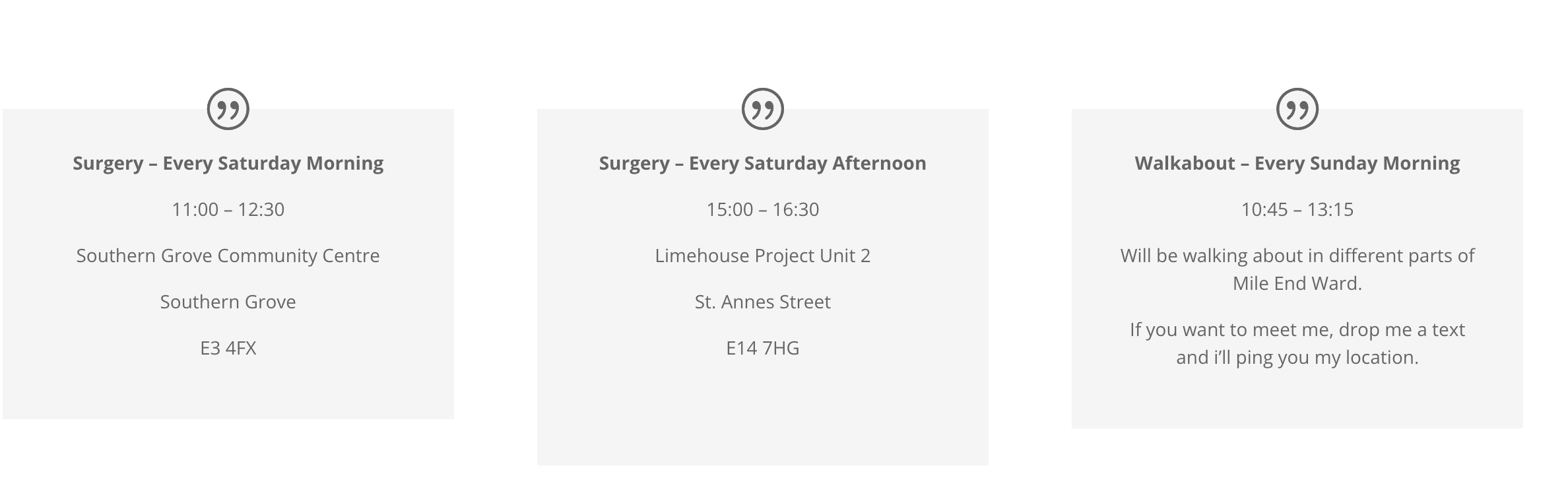
During my four years as an active backbench councillor, evenings and weekends were consumed entirely by the role: phone enquiries, home visits, two Saturday surgeries, and a Sunday morning ward walkabout. The workload was relentless and largely invisible to those who had never done it.
Tower Hamlets compounds this further. It is a borough defined by acute deprivation, half its children grow up in poverty, a burden that falls disproportionately on BAME communities and women, particularly on BAME women. These same groups face compounding barriers to public services through language barriers and digital exclusion. Face-to-face engagement is not optional; it is the only viable means of both reaching residents and understanding the problems they struggle to articulate.
Anyone dismissing the demands of the role has not done it while holding a full-time job outside of the councillor role.
The Opportunity Cost Nobody Acknowledges

There is also a material cost to serving as a councillor that critics of pay awards conveniently ignore. Personally, four years in the role meant forgoing other opportunities, professional and financial, that took a further four years to recover from.
I was advised early in my tenure by a senior Labour Party official that serving more than two terms as a councillor actively damages career prospects. Recruiters, he warned, view prolonged council service not as evidence of civic commitment but as a mark of professional stagnation. Those who stay too long, he noted, tend to find themselves channelled into careers tethered to local government, planning consultancy, and the third sector. Whether by design or by default.
I was fortunate. A civil service post during my tenure, followed by a national role in the Trade Union movement, provided a degree of insulation. Many others have not been so lucky. The financial and professional sacrifice of a councillor is real, and the refusal to acknowledge it in these debates does not help.
Rage Against the Bureaucracy: Elected Officials Do Not Own Their Positions, They Occupy Them
The most significant failure in critiques of this pay award is the refusal to grapple with the structural conditions that produce it.
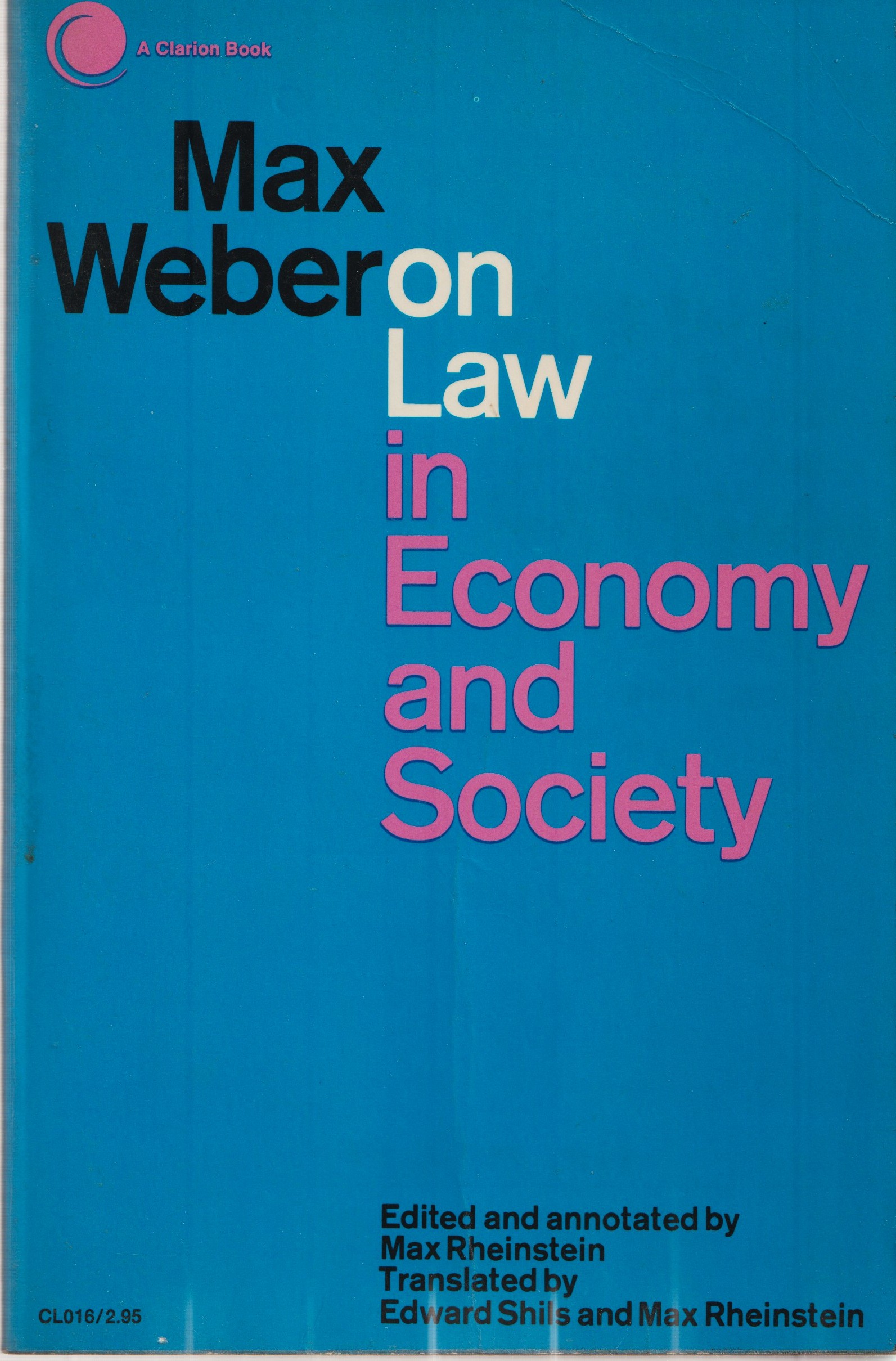
Max Weber’s analysis of bureaucracy remains instructive here. In his account, developed most fully in Economy and Society, bureaucracy represents the purest expression of modern rational-legal authority. It organises power through formal rules, impersonal procedures, and specialised offices, systematically displacing personal loyalty, tradition, and moral judgment. The result is an administratively efficient but potentially dehumanising order in which individuals become functionaries operating within systems they neither control nor fully understand.
That analysis applies directly to this situation. How much genuine autonomy do elected councillors possess when presented with a pay recommendation produced by officers, calibrated against comparisons from neighbouring authorities, and routed through a formal independent panel process? The answer is: considerably less than the critics assume.
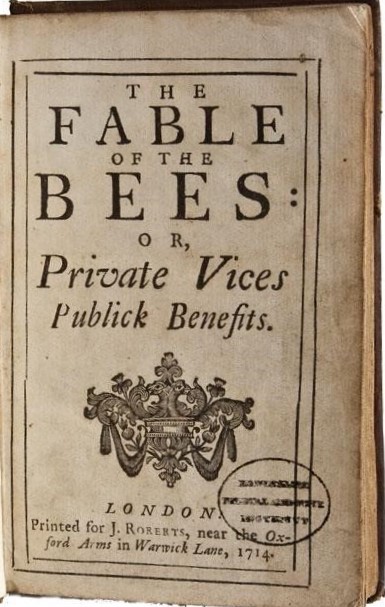
This matters because the values embedded within these bureaucratic structures are not politically neutral. They reflect a broad ethical consequentialism, the utilitarian calculus, traceable to Bernard Mandeville’s argument in The Fable of the Bees that private vices, properly channelled, yield public benefit. Within that framework, the individual moral act of voting against one’s own pay award is not merely inconvenient; it is structurally illegible.
TINA and the Political Class: Is There An Alternative?
That calculus did not remain a philosophical curiosity. It travelled directly into the foundations of British political culture. David Hume softened Mandeville’s provocation, arguing that self-interest, moderated by sympathy and social convention, was the natural engine of a well-functioning society.
Jeremy Bentham systematised it further, constructing utilitarianism as a governing science, the greatest happiness of the greatest number, which gave institutional reformers a morally respectable language for rationalising self-interest as public duty. John Stuart Mill refined the edges, introducing qualitative distinctions between pleasures, but left the essential architecture intact.
By the twentieth century, this tradition had become so thoroughly absorbed into British political life that it required no defence; it simply was the common sense of governance. Margaret Thatcher weaponised it, explicitly rehabilitating self-interest as a social virtue and dismantling the post-war consensus that had briefly interrupted it. Tony Blair completed the synthesis, marrying market logic to social democratic language and producing a political culture in which the pursuit of individual advantage within managed institutional structures was not merely tolerated but celebrated as progressive.
It is against this long ideological inheritance that Peter Oborne’s The Triumph of the Political Class delivers its most damaging charge: that British politics had produced a self-reinforcing caste, insulated from material consequences, whose members had internalised the language of public service whilst systematically advancing their own interests and who, crucially, no longer saw any contradiction between the two.
So why pin the whole thing on a British Bangladeshi Mayor in Tower Hamlets? If you were critical of John Biggs when he did the same and created additional roles, fair game if not, what’s with the obsession?
The Role of the Outsider: Khalwat Dar Anjuman — Solitude in the Crowd
Given all of the above, the genuine demands of the role, the real opportunity costs, and the structural pressures of bureaucratic governance, would I still have voted against the pay award, knowing it would be an isolated gesture that changed nothing?
Yes. Without hesitation.
For me, the function of a politician is not to complement existing bureaucratic conventions but to disrupt them. Political action derives its legitimacy from an ethical vision of a world better than the one we currently inhabit. An elected representative is not sent into that chamber to ratify the world as it is; they are sent to challenge it.
Isolated votes against the comfortable consensus matter precisely because they are isolated. They signal to others that alternatives exist, that dissent is possible, and that the ethical dimension of political life has not been entirely absorbed by administrative routine.
As Howard Zinn put it, the problem is civil obedience, not civil disobedience.
That principle does not expire simply because the political environment makes it inconvenient to apply it.
با خلق باش، با حق باش
Bā khalq bāsh, bā Ḥaqq bāsh
“Be with creation, But be with The Truth.“
Naqshbandi Sufi Teaching Mnemonic
Recent Comments