

Featured Image: Banner used by residents’ campaign for Tower Hamlets Council to adopt Transparency International Recommendations regarding the planning process.
Two years ago, I wrote about the potentially illegal decision taken at Tower Hamlets Strategic Planning Committee. In particular, focusing on allegations made against Councillor Abdal Ullah and the then Councillor Kabir Hussain. On the 26th of April, the High Court agreed.
The High Court’s decision to overturn planning permission for the Foster + Partners tower at 101 Whitechapel High Street is more than a legal setback for Tower Hamlets Council. It is an indictment of a planning culture that increasingly treats policy, heritage protections and public accountability as obstacles to be managed rather than principles to uphold.
For years, residents, campaigners and conservation groups warned that the scheme represented a dangerous precedent. They argued that the council was willing to override its own planning framework to accommodate a speculative office development that was plainly inappropriate for the site.
The court ruling suggests they had a point.
The decision, challenged successfully by SAVE Britain’s Heritage, sends the application back for reconsideration and shatters the assumption that approval was inevitable. More importantly, it raises serious questions about how planning decisions are being made in Tower Hamlets and whose interests they are ultimately serving.
A Tower That Contradicted the Borough’s Own Policies

The controversy surrounding 101 Whitechapel was never simply about architecture or height. The core issue was always policy.
The proposed office tower sits within the Whitechapel High Street Conservation Area and outside the borough’s designated tall buildings zone. Tower Hamlets’ own planning officers repeatedly warned that the development conflicted with the local plan and risked undermining the integrity of the borough’s wider planning framework.
That should have ended the matter.
Instead, councillors pressed ahead regardless.
Planning officers themselves warned that approving the scheme could weaken “good spatial planning” across the borough. In effect, the council was being told that if it approved this tower, it would be signalling that its own policies were negotiable when powerful developers arrived with enough money, prestige and political pressure behind them.
And that is precisely the perception many residents already have.
Tower Hamlets at A Crossroad
Following the decision, a petition was launched drawing attention to the role of former local ward councillor Kabir Hussain in the controversy surrounding the application. The petition attracted more than 2,000 signatures and called on Tower Hamlets Council to adopt recommendations made by Transparency International aimed at strengthening the integrity of local planning processes. Among the measures proposed was a ban on councillors acting as planning consultants for developers, a reform many residents argued was long overdue in a borough where public trust in planning decisions has become increasingly fragile.
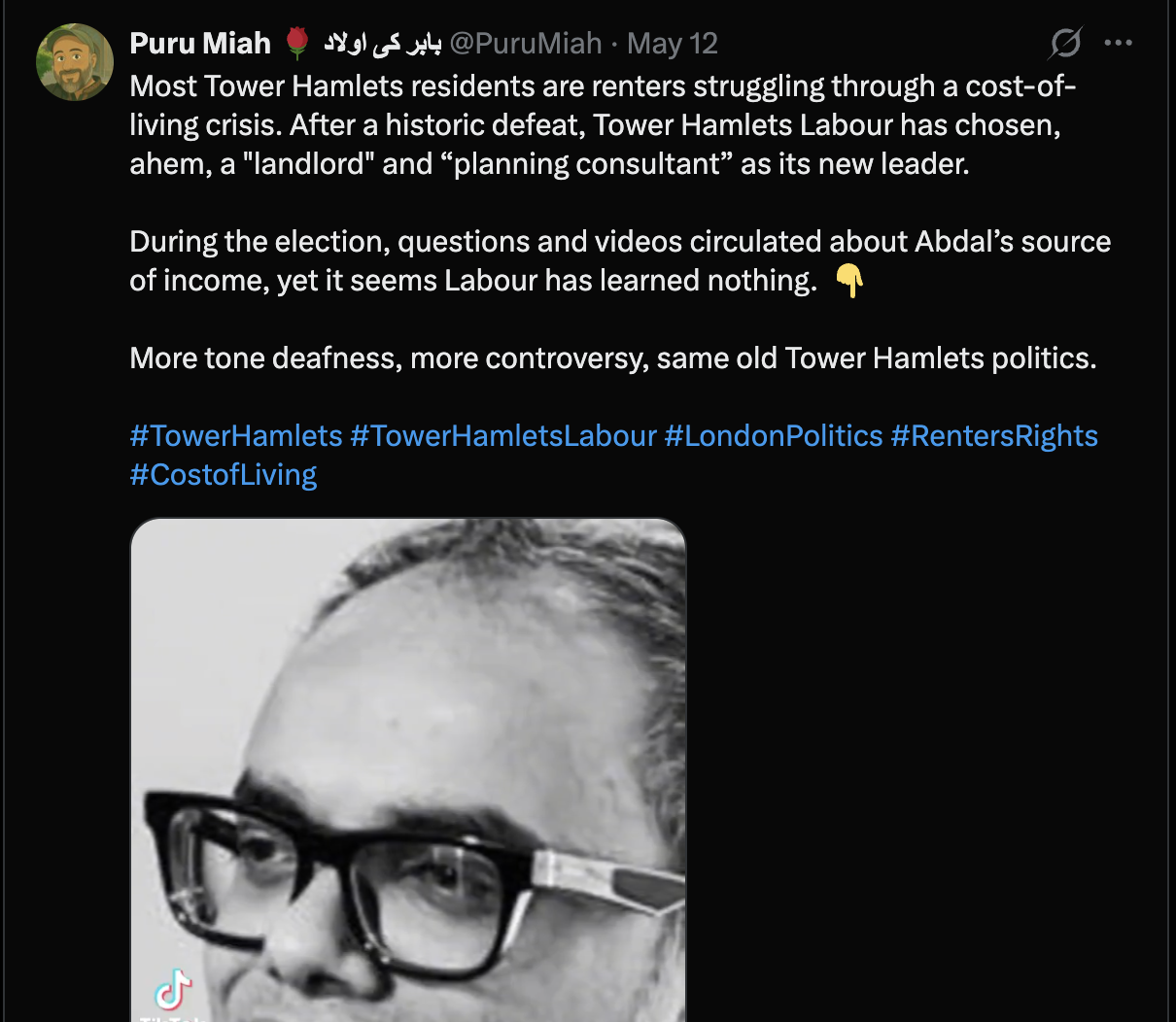
On 7 May 2026, residents voted Kabir Hussain out of office. Meanwhile, Abdal Ullah was elevated to leader of the Labour Group following the party’s historic collapse in Tower Hamlets, reduced to a generational low of just five councillors.
The question now is whether the return of the 101 Whitechapel application to the Strategic Development Committee will produce genuine reflection or simply another round of institutional déjà vu. The High Court has already exposed serious flaws in the original decision-making process. What remains to be seen is whether Tower Hamlets Council intends to learn from that judgment or repeat the same mistakes all over again.
Recent Comments